Predictor › Boxerdoodle
Boxerdoodle: size, coat & shedding by generation
Boxer × Poodle. Playful, high-energy and goofy; loves people and needs a job to do.
Parents modelled here: Boxer × Standard Poodle. Other Poodle sizes and generations ↓
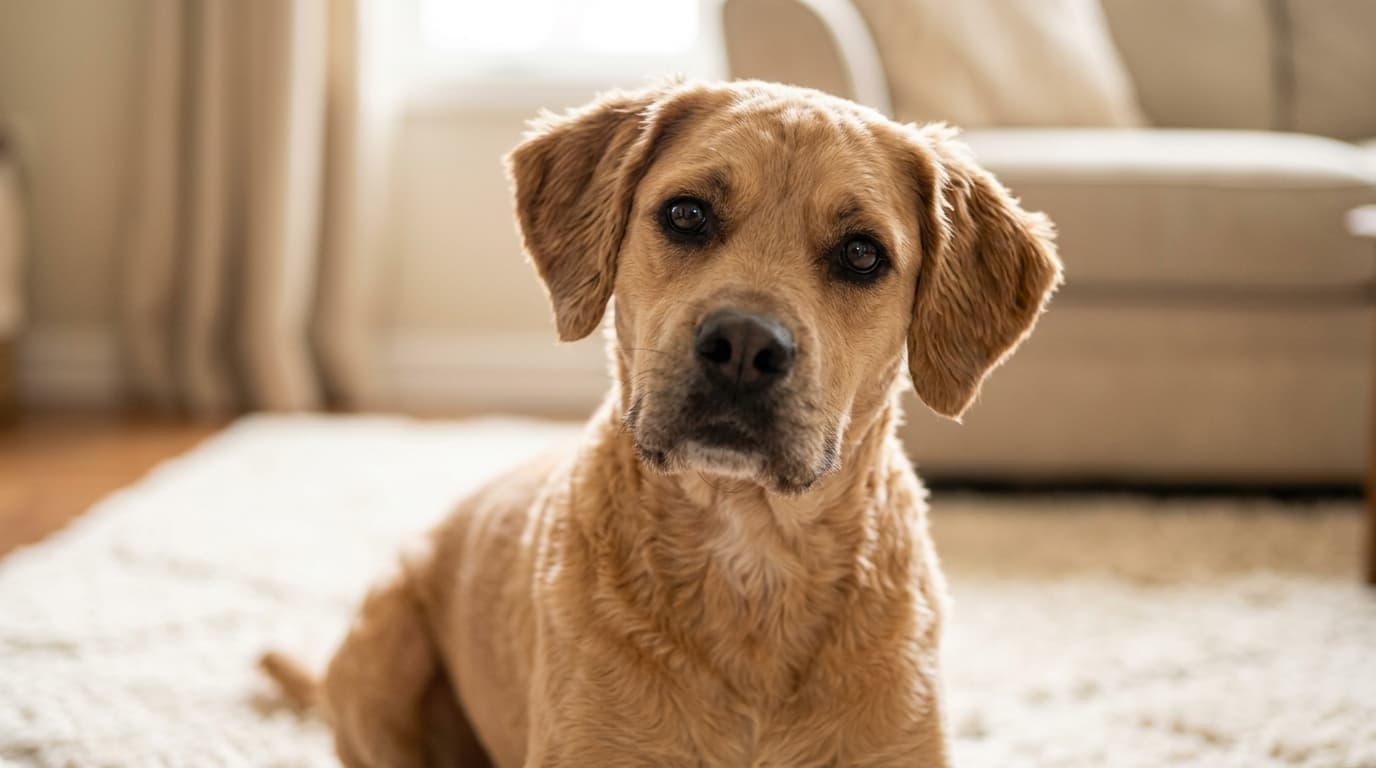
Boxerdoodle at a glance
Adult size
Coat type (F1)
Temperament
How big does a Boxerdoodle get when full grown?
An F1 Boxerdoodle from a Standard Poodle parent usually ends up 40–82 lb (18–37 kg) and 17–26 in tall at the shoulder. A Boxer (about 63 lb) and a Standard Poodle (about 57 lb) are close enough in weight that the generation hardly shifts the size: an F1B Boxerdoodle is 40–79 lb. The Poodle's size matters more than the generation. With a Miniature Poodle instead, an F1 Boxerdoodle is 26–53 lb.
The Boxerdoodle's parents side by side
| Parent | Adult weight | Height | Coat | Sheds | Energy · Train · Affection · Social (1–5) |
|---|---|---|---|---|---|
| Boxer | 55–71 lb 25–32 kg | 21–25 in | short and smooth | moderately | 5 · 4 · 5 · 4 |
| Miniature Poodle | 11–20 lb 5–9 kg | 11–15 in | curly | very little | 4 · 5 · 4 · 4 |
| Standard Poodle | 44–71 lb 20–32 kg | 18–24 in | curly | very little | 4 · 5 · 4 · 4 |
Do Boxerdoodles shed?
Less than a Boxer, provided the puppy gets the furnished doodle coat, which 98% of F1 Boxerdoodles do. A Boxerdoodle without it sheds moderately, like the Boxer's short, smooth coat. That risk sits mostly in F2 litters (about 1 in 4 puppies), so ask for F1 or F1B if shedding matters. No doodle is guaranteed non-shedding.
| Boxerdoodle generation | Adult weight | Curly / Wavy / Flat | Furnished coat | Size conf. |
|---|---|---|---|---|
| F1 Boxer × Standard Poodle | 40–82 lb 18–37 kg | 20% / 75% / 5% | 98% | Medium |
| F1B F1 Boxerdoodle × Poodle | 40–79 lb 18–36 kg | 50% / 48% / 2% | 100% | Medium-High |
| F2 F1 × F1 Boxerdoodle | 37–84 lb 17–38 kg | 30% / 45% / 25% | 75% | Low |
Furnished: the Boxerdoodle's beard-and-eyebrows coat. How the coat genes work →
What is an F1B Boxerdoodle?
An F1 Boxerdoodle bred back to a Poodle, so the puppies are about 75% Poodle and 25% Boxer. The coat comes out curlier than an F1's, and furnishings are near-certain. Size barely moves (40–79 lb). No dog is truly hypoallergenic, F1B included.
F2B, F1BB, multigen or a cross you're not sure of? Work out any litter's generation and coat odds →
What is the Boxerdoodle's temperament like?
The Boxer scores higher than the Poodle on energy (5 vs 4) and affection (5 vs 4). It scores lower on trainability (4 vs 5). The two match on sociability. An F1 Boxerdoodle averages out at very high energy, very high trainability, very high affection and high sociability. Those are averages, not promises: a Boxerdoodle with that much energy needs daily exercise and training, and meeting both parents tells you more than any score.
How the Boxerdoodle compares with all 45 doodles
- Size: the 13th heaviest of the 45 doodles we model (40–82 lb as an F1 on a Standard Poodle), between the Irish Doodle just above and the Dalmadoodle just below.
- Energy: very high (5/5) on our F1 blend. No doodle here scores higher; 10 tie with the Boxerdoodle.
- Shedding risk: the Boxer is a moderate shedder, as is the non-Poodle parent of 13 other doodles here, such as the Weimardoodle, Vizsladoodle and Springerdoodle.
Boxerdoodle by size
Miniature Poodle parent · F1 26–53 lb
Standard BoxerdoodleStandard Poodle parent · F1 40–82 lb
📈 Puppy on the way? See the Boxerdoodle growth chart & adult-weight calculator →
🎨 Curious about colours? See Boxerdoodle colors →
What health tests should a Boxerdoodle breeder do?
Ask for written results on both parents, not just a vet check. The Boxer club recommends 7 tests, and for a Standard Poodle the Poodle club recommends 5 (the list changes with Poodle size). Hip evaluation and thyroid (autoimmune thyroiditis) evaluation are on both lists, so ask for them on both sides: a Boxerdoodle can inherit the problem from either parent, and crossing breeds doesn't cancel it out.
| Boxerdoodle health checklist | Boxer | Miniature Poodle | Standard Poodle |
|---|---|---|---|
| Hip evaluation | ✓ | ✓ | ✓ |
| Thyroid (autoimmune thyroiditis) evaluation | ✓ | – | ✓ |
| Elbow evaluation | ✓ | – | – |
| Cardiac exam (AS/SAS, aortic valve) | ✓ | – | – |
| ARVC (Boxer cardiomyopathy) DNA test | ✓ | – | – |
| Annual Holter monitor for Boxer cardiomyopathy | ✓ | – | – |
| DM (degenerative myelopathy) DNA test | ✓ | – | – |
| Patella evaluation | – | ✓ | – |
| Eye exam by a veterinary ophthalmologist | – | ✓ | ✓ |
| PRA-prcd DNA test | – | ✓ | – |
| NEwS DNA test | – | – | ✓ |
| von Willebrand disease I DNA test | – | – | ✓ |
| Life expectancy (AKC) | 10–12 yrs | 10–18 yrs | 10–18 yrs |
Sources: AKC Boxer, Miniature Poodle and Standard Poodle pages, checked 1 Nov 2026. OFA (ofa.org) lists many Boxer and Poodle results by registered name.
How long do Boxerdoodles live?
There's no study of Boxerdoodle lifespan, so treat exact figures with suspicion. The AKC lists 10–12 years for the Boxer and 10–18 years for the Poodle, and across dogs, smaller usually means longer-lived (Kraus et al., 2013): a Boxerdoodle from a Miniature Poodle may outlive one from a Standard Poodle.
Boxerdoodle predictor: other sizes and generations
Know both parents' adult weights? Add them (optional)
Breeders usually list them. For an F1B or F2, enter what the actual parents weigh (the doodle and the Poodle, or both doodles).
Adult weight Confidence: Medium
40–82 lb
Height ~17–26 in · 50% Poodle
Coat type Confidence: Medium
Shedding
98%
chance of the furnished "doodle" coat, which sheds far less. Without it, a pup sheds moderately, like the Boxer.
Temperament blend
- energyVery high
- trainabilityVery high
- affectionVery high
- sociabilityHigh
Crossing a different breed with a Poodle? Use the full predictor.
Doodles closest in size to the Boxerdoodle
- Irish Doodle (Irish Setter × Standard Poodle): F1 40–82 lb, high energy, heavy-shedding Irish Setter side.
- Goldendoodle (Golden Retriever × Standard Poodle): F1 40–84 lb, high energy, heavy-shedding Golden Retriever side.
- Labradoodle (Labrador Retriever × Standard Poodle): F1 37–86 lb, very high energy, heavy-shedding Labrador Retriever side.
- Shepadoodle (German Shepherd × Standard Poodle): F1 35–90 lb, very high energy, heavy-shedding German Shepherd side.
- Weimardoodle (Weimaraner × Standard Poodle): F1 37–90 lb, very high energy, moderate-shedding Weimaraner side.
- Dalmadoodle (Dalmatian × Standard Poodle): F1 33–82 lb, very high energy, heavy-shedding Dalmatian side.
See all 45 on the predictor or the growth chart hub.